Flamenco Dance Classes in Bournemouth
Flamenco Bournemouth
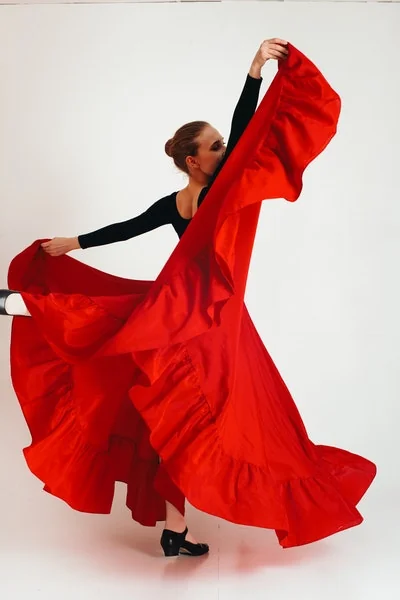 Flamenco — Bournemouth
Class is coming soon
Drop us your details for class news
Class Details
Location: Bournemouth Town Centre
Day: TBC
Time: TBC
Age Group: 17 – 75
Teacher: —
Class Structure
Beginners Class — 60 Minutes
Posture & Warm-Up
Opening the chest, circling the wrists and rooting the feet — settling into the tall, proud bearing that every flamenco move is built upon.
Footwork (Taconeo)
Tacones, toe accents and ball-of-foot beats rehearsed at a crawl then pushed up to speed, until your feet become a drum kit holding a conversation with the guitarist.
Arms & Hands (Braceo)
Tracing wide arcs with the arms and spiralling the wrists in floreo, set against a slowly rotating upper body, builds that instantly recognisable flamenco silhouette.
Palmas & Choreography
Clapping the compás as a group, then folding footwork, braceo and a turn into a short routine set to the week's chosen palo.
Full Run & Cool Down
Performing the whole sequence at full intensity, all fire and duende, before unwinding the calves, wrists and shoulders through a slow, careful stretch.
About Flamenco Dance Classes in Bournemouth
Flamenco is southern Spain's passion turned into movement — a proud carriage, drumming heels and arms that draw shapes through the air above you. Our weekly flamenco classes in Bournemouth unpick the craft a piece at a time: the percussive taconeo of the feet, the flowing braceo and floreo of the arms and hands, the palmas claps that anchor the rhythm and the compás that ties the whole thing together. You will meet the classic palos along the way, from the depth of soleá to the sparkle of alegrías, working toward a short routine that becomes your own.
Bournemouth has a genuine taste for Spanish culture — through summer festivals on the seafront, a busy student arts scene from BU and AUB, and the touring flamenco shows that pass along the south coast — yet a dependable weekly class for adult beginners and improvers has been hard to come by. We hold ours at the town-centre studio on Commercial Road, a short walk from the Triangle and the Old Christchurch Road bars, with a hard floor made for taconeo and within easy reach of East Cliff, Boscombe and Westbourne. With the pier and seven miles of sand on the doorstep, there is no shortage of summer evenings to show off what you have learned.
No background is required at all — bring nothing more than a readiness to stamp, clap along and surrender to the music. Slip on something with a firm heel to begin with — a character shoe or any hard-soled pair fits the bill — together with clothing loose enough to move in. Browse the full set of 20 dance classes in Bournemouth, or gather your friends for a spirited flamenco hen party.
Ask Us About Flamenco
Pop your details below and we'll keep you posted on days, times and the timetable.
What You Get From Flamenco
Feet That Speak
The drumming taconeo makes your feet sing, building timing, coordination and an instinct for the beat that follows you into every other style you take up.
Let the Fire Out
Flamenco gives real emotion somewhere to go — defiance, yearning, outright joy. To dance with duende is to let something out, a catharsis as much as a performance.
Stand Tall
The proud, upright bearing at the heart of flamenco slowly changes how you carry yourself, lending more poise to the way you stand and walk well beyond the studio.
Strong From the Ground Up
Pounding footwork builds calf and ankle strength while the raised, sweeping arms test the shoulders and back — a full-body workout wrapped up in Spanish passion.
Your Flamenco Dance Journey
From that opening heel stamp to dancing a full routine with real fire — here is the shape of the journey.
Finding Your Stance
Getting Started
Meeting that dignified upright stance, striking your debut golpe, drilling heel and toe contacts, and sketching the earliest arm and hand positions. The trick early on is feeling planted into the floor yet stretched tall all at once.
What to Wear
To begin, choose a shoe with a firm, solid heel — a character shoe, a Cuban heel or any hard-soled pair will do. A flowing falda skirt is the classic touch though never required, and a close-fitting top makes the shape of your arms simple to follow.
Catching the Compás
Developing Technique
Stretching the footwork into longer phrases, adding braceo with its rotating floreo and attempting early turns. This is where the compás starts to land — the looping count of beats that lends every palo its own backbone.
Palmas & Rhythm
Striking palmas on the beat, stamping out the accents and noticing how a twelve-beat palo carries differently from a four-beat one as the pulse settles into you.
Dancing With Duende
Choreographic Pieces
Threading feet, arms and turns into one continuous piece — the opening llamada, the climb and the finish — then colouring every phrase with the raw feeling that gives flamenco its purpose.
Cultural Context
Learning to recognise each palo by its mood — the solemn pull of soleá, the sunny bounce of alegrías, the loose roll of tangos — and what every one of them demands from the dancer.
The Confident Bailaora
Performance & Artistry
Dancing to guitar and cante with the assurance to read the music as it happens, pouring your own feeling into a piece rather than simply counting the steps.
What Comes Next
Add castanet and abanico technique to your repertoire, catch a touring tablao show, or cross into tango or salsa to explore rhythm and a partner hold from another direction.
Flamenco Dance FAQ
The things newcomers most often want cleared up before a first flamenco class with us.
Can someone who has never danced flamenco get started? +
Of course. Your first lesson opens with the tall, proud carriage, one clean heel stamp and an opening sweep of the hands, and we build outward from there. Almost everyone arriving at our Bournemouth class is brand new to flamenco, so you will progress shoulder to shoulder with others at the very same point.
What footwear works best for a flamenco lesson? +
Pick a shoe with a firm, solid heel so every strike rings out across the floor — a character shoe, a Cuban heel or any hard-soled shoe will serve you well. Proper flamenco shoes fitted with nails are lovely but unnecessary while you are starting out. Keep the trainers and soft pumps in your bag.
What actually happens during a flamenco class? +
A typical hour flows from posture and warm-up into the drumming footwork called taconeo, then the sweeping arm and hand work of braceo and floreo, palmas claps to lock the rhythm, and finally a short routine set to one traditional palo. You head home having sharpened your technique and danced a complete piece.
Is there a saving on a block of flamenco classes? +
A one-off drop-in costs £10 with no joining fee and nothing to commit to. Prefer to settle in? A four-week block is £32, which works out at £8 a session. Nothing ties you down — no contract, no membership, just turn up whenever the week allows.
Whereabouts in Bournemouth are the flamenco classes held? +
Our weekly regulars gather at the town-centre studio on Commercial Road, a couple of minutes from the Triangle and the Old Christchurch Road bars and an easy reach for BU and AUB students. The hard floor is ideal for footwork. More venues across town are on the way, so ask about a slot nearer you.
Do I need Spanish roots or the language to dance flamenco? +
Not one bit. Flamenco is treasured the world over, and the Spanish vocabulary sticks naturally as the weeks pass. All you bring is curiosity and respect for the art — the passion and duende rise straight out of the music and the movement.
Does flamenco give you a proper workout? +
It certainly does. The driving stamps fire up your calves, ankles and core, while keeping the arms raised through floreo asks plenty of the shoulders and back. You leave warm, worked and quietly amazed at the sweat a single hour of compás can draw.
Will we use castanets, fans or shawls? +
We hold them back at the outset, since the priority is getting feet, arms, hands and timing onto firm ground first. As soon as your footwork and arm carriage feel dependable, extras like the castanets, the folding abanico and the draping mantón begin to appear within the routines.
What kind of music plays in a flamenco class? +
The soundtrack is warm flamenco guitar layered with cante vocals and driving percussion. As the weeks go by you begin to tell the palos apart — the gravity of soleá, the brightness of alegrías, the crackle of bulerías and the easy swing of tangos — each carrying its own compás, feeling and pace.
Can I book private flamenco lessons in Bournemouth? +
Yes — one-to-one and small-group tuition can be set up whenever you like. It suits preparing for a performance, putting together choreography for an occasion or polishing a stubborn escobilla. Get in touch and we will shape the sessions around your goals.
Fancy Finding the Fire of Flamenco in Bournemouth?
Say the word and we'll send over the latest flamenco timetable the moment the dates are locked in.
Get More Info →